
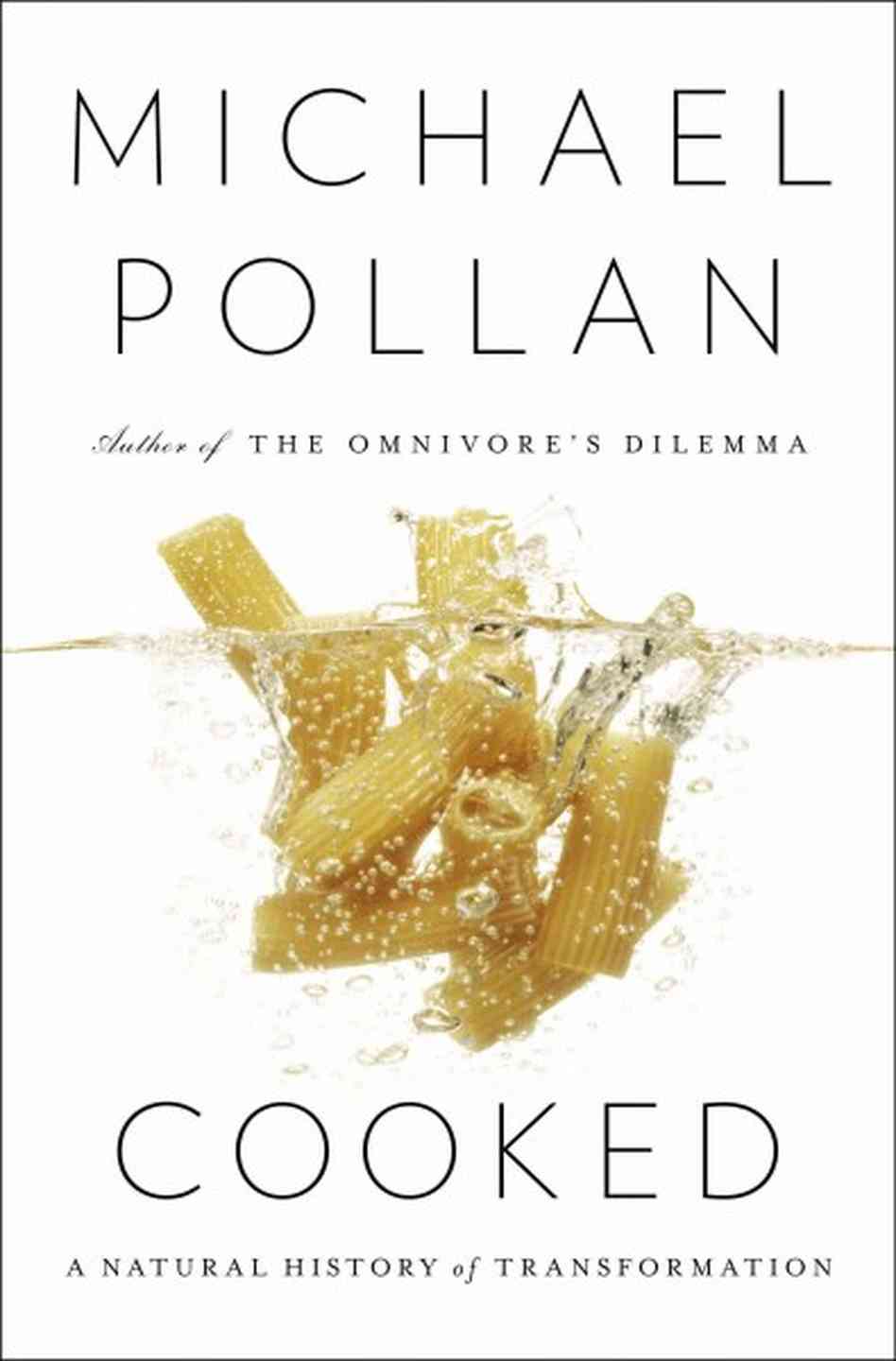
 The term cooking conjures up a variety of emotions: It can mean something delicious is bubbling on the stove. It can mean absolute drudgery. It can mean relationships, as in “I love my husband’s cooking.” But what is going on really, in the process that transforms animal protein and active yeast into barbecued meat resting on a pillowy bun? And if more people knew about those techniques, would they actually cook? Food journalist Michael Pollan thinks so. In Cooked: A Natural History of Transformation, Pollan explores four elements – fire, water, air, earth – to breathe new life and understanding into an activity that he calls essential and exclusive to the human experience. (READ the full review on CSMonitor.com)
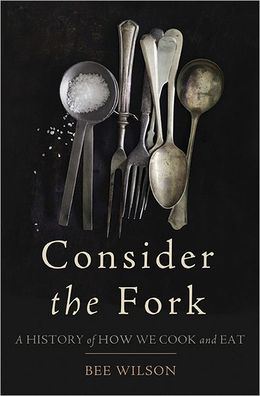 There is nothing fancy about a wooden spoon – no flashing lights or neon colors. And yet, as kitchen gadget fads come and go, nothing seems to replace the feel of a smooth wooden handle nestled in the palm stirring over a stovetop. Why is that? Bee Wilson in her book, Consider the Fork: A History of How We Cook and Eat, strives to answer this and other kitchen curiosities by tracing the evolution of kitchen technologies and the cultural influences that shaped them. (READ the full review on CSMonitor.com.)
 Food memoirs have become rather predictable. Most seem to blend quaintness with family recipes, a passion for flavors and words, and often a love story evoked by the writer’s skill in the kitchen. Gabrielle Hamilton, owner and chef of Prune in New York City, has written a food memoir that defies this kind of cuteness. Instead Blood, Bones and Butter delivers the story of a life shaped by food with the intensity of a blast of hot air from a 500 degree F. oven. (READ the full review on CSMonitor.com.)
 The Manhattan Women’s Swimming Association (WSA), founded in 1917, aimed to teach women and children how to swim. And one of those youngsters was Gertrude “Trudy” Ederle of Atlantic Highlands,N.J., would not only go on to become one of the globe’s fastest swimmers but also the first woman to cross the English Channel. Glenn Stout does a masterly job of re-creating her feat in Young Woman & the Sea: How Trudy Ederle Conquered the English Channel and Inspired the World. (READ the full review on CSMonitor.com)
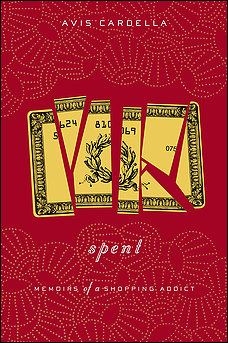 Everyone has a story about a penny-pinching great-auntie who darned her nylons instead of tossing them out. The resourcefulness of the Greatest Generation in tough times stands in stark contrast to today’s accepted overspending. (READ “Slurge a little on 3 books that offer advice on spending, saving,” a round-up of three book reviews, “Spent,” by Avis Cardella, “Hot (Broke) Messes,” by Nancy Trejos, and “Shift Your Habit,” by Elizabeth Rogers, for The Washington Post.)
More reviews:
“Delancey: A man, a Woman, a Restaurant, a Marriage”
“Cowgirl Chef”
“Heirloom: Notes from an accidental tomato farmer”
“Amarcord: Marcella remembers”
“The Tenth Muse: My life in food”
“Shark’s Fin and Sichuan Pepper: A Sweet-Sour Memoir of Eating in China”
“In Defense of Food”
“Food Matters”
“What We Eat When We Eat Alone”
“A Homemade Life“
 Kendra Nordin Beato